The Smart Job Seeker’s Guide
by Julie Lancaster View Bio
What to Do, Where to Start, and How to Stand Out
Introduction
Looking for a job is one of the most demanding undertakings a professional can face. Whether you are entering the workforce for the first time, navigating a career change, or returning after a break, the process involves far more than firing off applications and hoping for the best. It requires strategic thinking, personal reflection, consistent relationship-building, and the ability to communicate your value with clarity and confidence. According to the Pew Research Center’s December 2024 report on job skills and training, 30% of U.S. workers say they need more education and training to get ahead in their job or career. Yet the same study shows that most workers cite communication, critical thinking, and interpersonal skills as the most important competencies for success today. The gap between where job seekers are and where they need to be is real, but it is also closable.
This guide brings together insights from five of the most trusted sources in professional development to give you a clear, actionable roadmap for your job search.
Step 1: Know Yourself Before You Apply
One of the most overlooked steps in the job search is the one that happens before a single application is submitted: self-assessment. MindTools emphasizes that a forced fit, pursuing a role whose values or demands do not align with your own, almost always results in dissatisfaction and a faster exit from the position.
Before applying, ask yourself the following questions:
- How do my personal goals align with this role?
- Will this position fulfill what I want and need in my career at this stage?
- Do the company’s values align with mine?
- Am I prepared to perform on day one, or do I need to invest in skill-building first?
MindTools advises that knowing when not to pursue an opportunity is just as important as knowing which ones to chase. If a job does not fit, you are empowered to withdraw. Clarity about your own goals at the outset dramatically reduces time wasted on misaligned opportunities.
Key Takeaway: Match your values to the role. A well-aligned job search is a shorter job search

Step 2: Build Your Professional Brand Online
SHRM, the world’s largest HR professional association, consistently identifies personal branding and a polished digital presence as among the most critical factors in a successful job search.
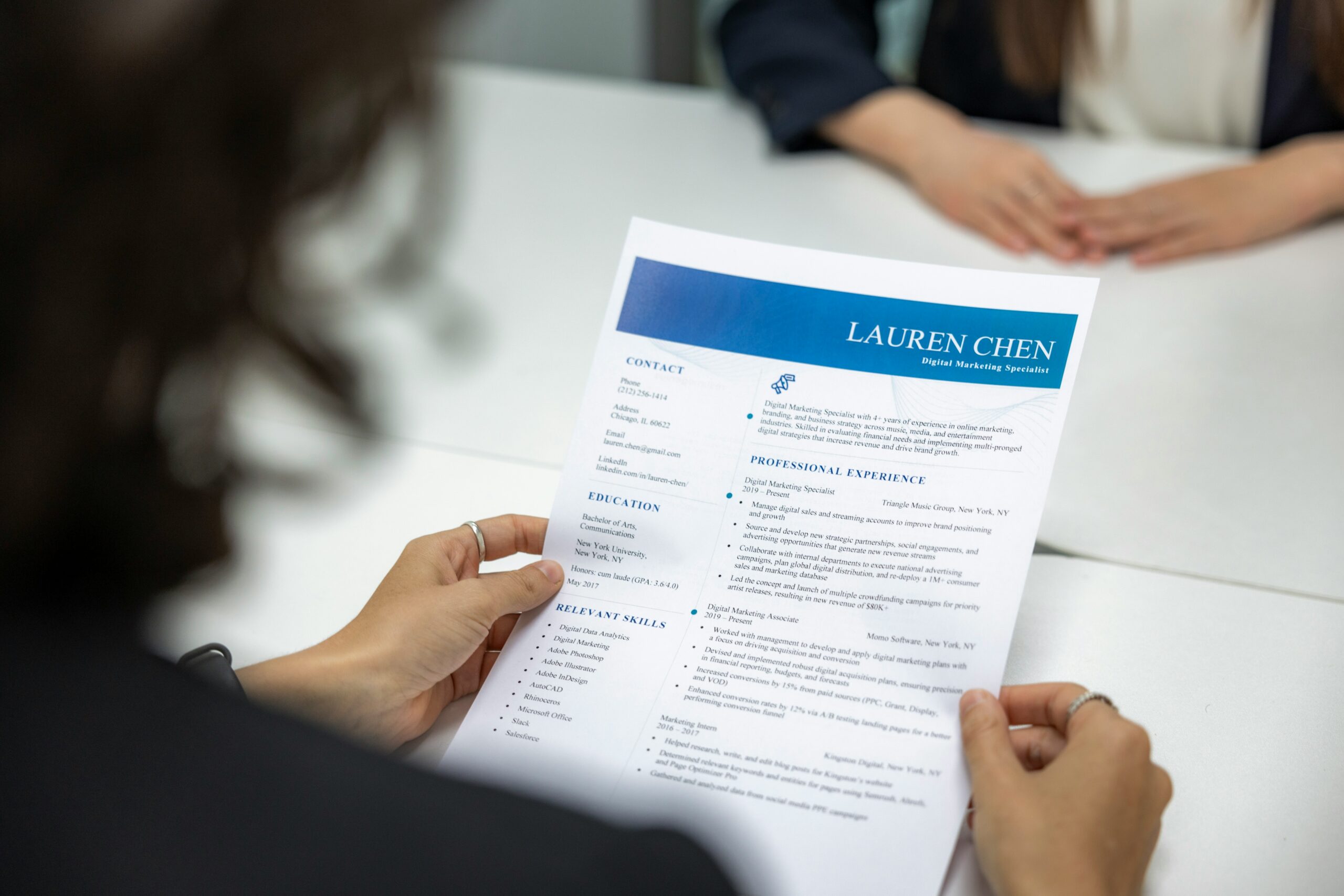
Your resume, cover letter, and LinkedIn profile are not just documents. They are marketing collateral. They must be built with intention.
Your Resume
A strong resume does not just list what you have done. It communicates the value you delivered. SHRM recommends:
- Quantify results. Use numbers wherever possible. “Increased sales by 32%” is far more compelling than “responsible for sales.”
- Tailor every application. Mirror language from the job description to improve your match score with Applicant Tracking Systems (ATS).
- Keep it concise. Unless you are a senior executive with 20+ years of diverse experience, aim for one to two pages maximum.
Your LinkedIn Profile
SHRM’s career advice highlights five immediate improvements you can make to your LinkedIn profile:
- Use a professional, current headshot. Profiles with photos receive dramatically more views.
- Write a compelling headline. Go beyond your job title. State your value proposition in plain language.
- Fill in your “About” section. Tell your story. Who you are, what you do, and what you are looking for.
- Customize your LinkedIn URL. A clean URL (linkedin.com/in/yourname) looks polished on a resume.
- Request recommendations. A few strong endorsements from managers or colleagues carry significant weight.
Key Takeaway: Treat your resume and LinkedIn profile as living documents. Refresh them before every major application cycle.
Step 3: Network With the People You Already Know
Career coach and Wharton School director Dawn Graham has a counterintuitive take on networking that makes it far less intimidating: you do not need to approach strangers. You simply need to have different conversations with the people you already know.
After losing her job unexpectedly, Graham spent months applying online with no results. Then one brief conversation with a neighbor led to an interview within two weeks. Her conclusion:
hiring managers want to make good decisions efficiently, and referrals give them the trust signal they need to move forward.
Graham’s approach involves simply changing the topic of conversations you are already having. Instead of waiting for the “right” moment to ask someone for help, try:
- Mentioning your career goals or job search naturally in everyday conversations.
- Asking former colleagues what they are working on, then sharing what you are exploring.
- Reconnecting with contacts on LinkedIn with a brief, genuine message about mutual interests.
- Asking for introductions, not favors. A warm referral is exponentially more effective than a cold application.
The TED Ideas piece reminds us that “regardless of the overwhelming evidence for networking, we are still seduced into a linear click-apply-send process because approaching people we do not know makes us feel vulnerable.” The fix is not to push past that vulnerability with strangers, but to redirect it into existing relationships.
Key Takeaway: The best networking is a conversation you are already having. Change the topic, not the person.

Step 4: Master the Interview
Securing an interview is only half the battle. According to Harvard Business Review’s comprehensive 2024 guide on interview performance, there are many moving parts to a successful interview that go far beyond memorizing answers to common questions.
Before the Interview
- Research the company deeply. Know their mission, recent news, key products, and culture. Interviewers notice when candidates do their homework.
- Use LinkedIn to study your interviewers. Understanding their backgrounds helps you establish a connection and anticipate their priorities.
- Prepare questions. HBR recommends preparing at least five thoughtful questions that demonstrate genuine curiosity about the role and the organization.
During the Interview
- Use the STAR method. Structure your answers around Situation, Task, Action, and Result. It keeps responses focused and evidence-based.
- Show warmth, not just competence. HBR highlights that interviewers are assessing cultural fit as much as technical ability. Be human, not just impressive.
- Recover gracefully from mistakes. If you stumble on a question, do not spiral. Acknowledge it and move forward. Resilience under pressure is itself a quality interviewers value.
- Convey your personal story. Translate your experience into a narrative arc that shows how this role is the natural next chapter.
After the Interview
- Send a thank-you note within 24 hours. A concise, personalized email that references a specific moment from the interview is far more effective than a generic message.
- Follow up if you have not heard back. One polite follow-up after the stated timeline is appropriate and shows continued interest.
Key Takeaway: The interview is a conversation, not an interrogation. Preparation, authenticity, and clear storytelling are what differentiate great candidates from qualified ones.

Step 5: Invest in Your Skills and Long-Term Employability
Pew Research Center’s December 2024 analysis of the U.S. workforce reveals a striking fact: while 70% of workers say they currently have the education and training they need to get ahead, a significant 30% say they do not. More importantly, the data shows that communication, critical thinking, and interpersonal skills rank at the top of what employers and workers alike identify as essential for career success today.
What Skills Should You Focus On?
According to Pew Research, the most consistently valued skills across industries and career levels include:
- Communication skills: The ability to convey information clearly in writing and in person is cited by workers and employers as the single most valuable skill for long-term career success.
- Critical thinking and problem-solving: The capacity to analyze information and reason through complex situations is highly valued across job types and salary levels.
- Adaptability: Workers who demonstrate flexibility and a willingness to learn new tools and methods are consistently favored in rapidly evolving industries.
- Digital and AI literacy: As AI tools become embedded in nearly every workplace function, basic fluency with technology and an ability to work alongside AI systems is becoming a baseline expectation, not a differentiator.
How to Build Your Skills During a Job Search
- Take free or low-cost online courses. Platforms like Coursera, LinkedIn Learning, and edX offer certifications that can bolster your profile while you search.
- Volunteer or take on freelance work. Real-world application accelerates learning and gives you recent, relevant experience to discuss in interviews.
- Document your learning. Add certifications, courses, and relevant projects to your LinkedIn profile as you complete them. This signals forward momentum to recruiters.
Key Takeaway: 30% of workers say they need more training to advance. Use your job search period as a deliberate investment in the skills that matter most.

Putting It All Together: Your Job Search Action Plan
A successful job search is not a sprint. It is a deliberate, multi-front campaign that requires consistency across every dimension. Use this framework as your checklist:
Step 1: Know Yourself
Complete a self-assessment. Identify your values, goals, and ideal work environment before applying anywhere.
Step 2: Build Your Brand
Update your resume and LinkedIn profile. Quantify results, tailor to each role, and establish a professional digital presence.
Step 3: Activate Your Network
Have career conversations with people you already know. Ask for introductions, not just job leads.
Step 4: Prepare to Interview
Research every company. Prepare STAR-method answers. Ask thoughtful questions. Follow up afterward.
Step 5: Invest in Skills
Identify any skill gaps. Take targeted courses, earn certifications, and add them to your profile in real time.
Conclusion
Finding the right job takes more than a polished resume and a few application clicks. It takes a willingness to look inward, invest in your craft, show up consistently for the people in your network, and communicate your value with confidence.
The research is detailed. Workers who take a strategic, proactive approach to their job search, rather than a passive, reactive one, spend less time searching and land roles that are a better long-term fit. The five steps outlined in this guide represent the consensus of the most respected voices in career development, HR, and workplace research.
Start with one step today. Know your values. Refresh your profile. Reach out to someone you have not spoken to in a while. Prepare for the interview you have not been offered yet. Learn the skill that will matter most in the next role. The job you want is looking for someone who acts before they have every answer.
MORE BLOG POSTS

251 Miles: A Commitment to Recharge
Each summer, I make a commitment to recharge. I commonly encourage my clients to recharge. And perhaps taking a vacation seems like one of the easiest things to do. But …

Lessons from my father
“You may as well catch the ball.” Those words were a defining moment in my development. I was 10 years old and had just completed my first Pop Warner football …