Building Public Trust: An MPA Perspective

by Julie Lancaster View Bio
Graduate programs in Public Administration (MPA) often approach public trust as a function of legitimacy, competence, accountability, responsiveness, and ethical leadership. Rather than viewing trust primarily as a communication challenge, MPA frameworks emphasize that trust is built through systems, institutional performance, fairness, and the day-to-day experiences citizens have with government. The following principles represent some of the most commonly cited drivers of public trust within the field of public administration.
1. Legitimacy
Citizens must believe government has the right to govern. This trust develops through fairness, lawful processes, and democratic participation.
2. Accountability
Public institutions must answer for decisions and outcomes. Oversight, audits, ethics policies, and transparency all contribute to accountability.
3. Administrative Competence
Trust rises when government services are reliable, efficient, and effective. Citizens often judge trustworthiness through everyday experiences such as road maintenance, emergency response, permit processing, public safety, utilities, education, and customer service.
4. Procedural Justice
Research consistently shows that people care not only about outcomes, but whether they were treated respectfully and fairly throughout the process. Even unpopular decisions can maintain trust if the process feels fair.
5. Transparency
Open records, accessible budgets, public meetings, and understandable communication reduce suspicion and increase legitimacy.
6. Citizen Participation
Modern public administration increasingly emphasizes collaborative governance. Participation increases public buy-in and strengthens trust.
7. Ethical Leadership
Corruption, favoritism, and misuse of power rapidly erode trust. Ethical conduct is considered foundational within MPA training and public leadership.
8. Responsiveness
Citizens trust governments that listen and adapt. Responsiveness signals both respect and competence.
9. Consistency
Predictable enforcement and stable policies increase institutional confidence, while arbitrary or inconsistent decisions weaken trust.
10. Social Capital and Relationships
Many public administration scholars argue that trust is relational. Community partnerships, local engagement, and positive interactions with public employees strongly influence perceptions of government.
What the Research Often Says
Public administration research frequently finds that trust is built less through public relations campaigns and more through everyday service quality, fair treatment, visible integrity, and opportunities for meaningful engagement. A common theme throughout MPA literature is that “trust is earned operationally, not rhetorically.” Another major concept in public administration is that trust is cumulative: while one positive interaction may help, it is repeated and consistent experiences that sustain long-term public confidence. Scholars commonly associated with these ideas include Elinor Ostrom, Robert Putnam, and Mark Moore.
As governments continue navigating increasing public scrutiny and societal complexity, the ability to build and maintain trust has become one of the most important responsibilities of public leadership. MPA frameworks consistently suggest that trust is not created through messaging alone, but through ethical systems, competent service delivery, transparency, fairness, and genuine civic engagement. When citizens repeatedly experience effective and respectful governance, trust becomes more durable and resilient over time.
MORE BLOG POSTS

Facilitation Skills 201: Elevating Your Impact
Facilitation goes beyond guiding a discussion, it’s about creating an engaging, meaningful experience. At an advanced level, great facilitators master connection, energy, and adaptability. Here are six key skills to …
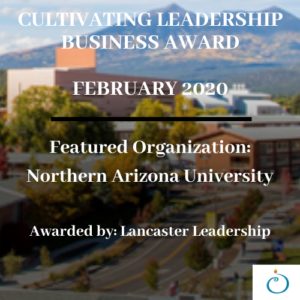
Cultivating Leadership Business Award for February 2020
We know NAU to be an exceptional institution serving approximately 30,000 students, but what you might not know is its commitment to developing its departments and teams of employees. With …